2026-09-21 · 4 min read
The Peshawari chappal, anatomy of an icon
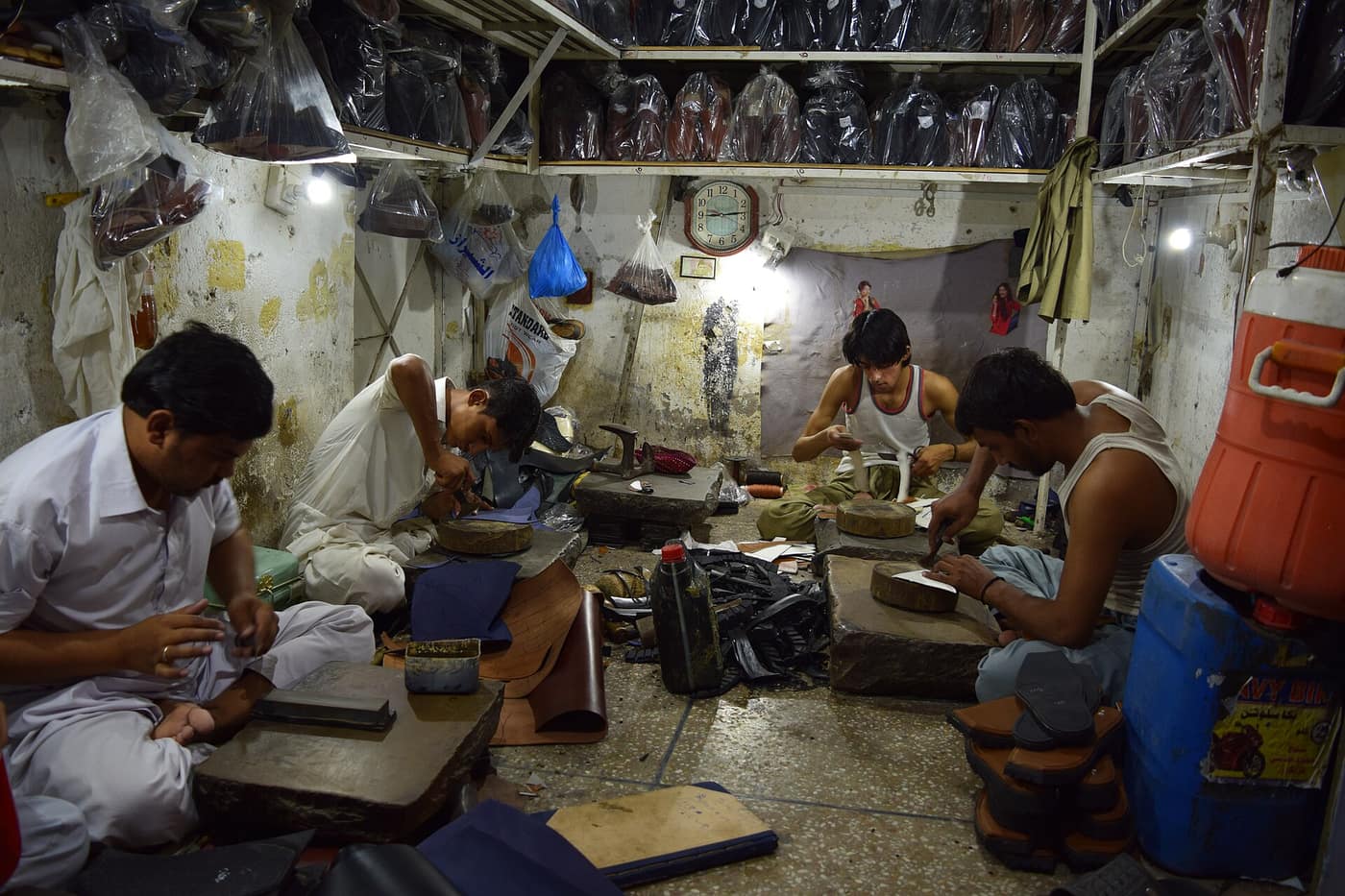
A true Peshawari chappal is built, not assembled. The upper is cut by hand from a single hide section, the straps are stitched — never just glued — and the sole is built up in layers on a last, the way a shoemaker builds a shoe. In the workshops of Peshawar and the neighbouring town of Charsadda, the same benches and wooden forms have been in service for generations.
The “Kaptaan” style — a broad, layered sole with a wide crossed front — became the silhouette everyone asks for. Its appeal is practical as much as aesthetic: more sole layers mean more structure underfoot, and the wide front suits feet that spend long days in shalwar kameez.
When you commission a pair from us, the maker works from your foot tracings rather than a size chart. Leather choice changes the character: vegetable-tanned cowhide for structure, goatskin for softness, suede for texture. Soles come single, double or triple. It is worth saying plainly: a hand-stitched pair will feel stiff for the first week and then mould to your foot in a way no moulded factory shoe ever does.
Care is simple. Keep them dry, feed the leather occasionally, and have a cobbler restitch the toe straps after a few years of hard service — a well-made pair is designed to be repaired, not replaced.