2026-09-21 · 4 min read
Swat’s carved wooden palaces
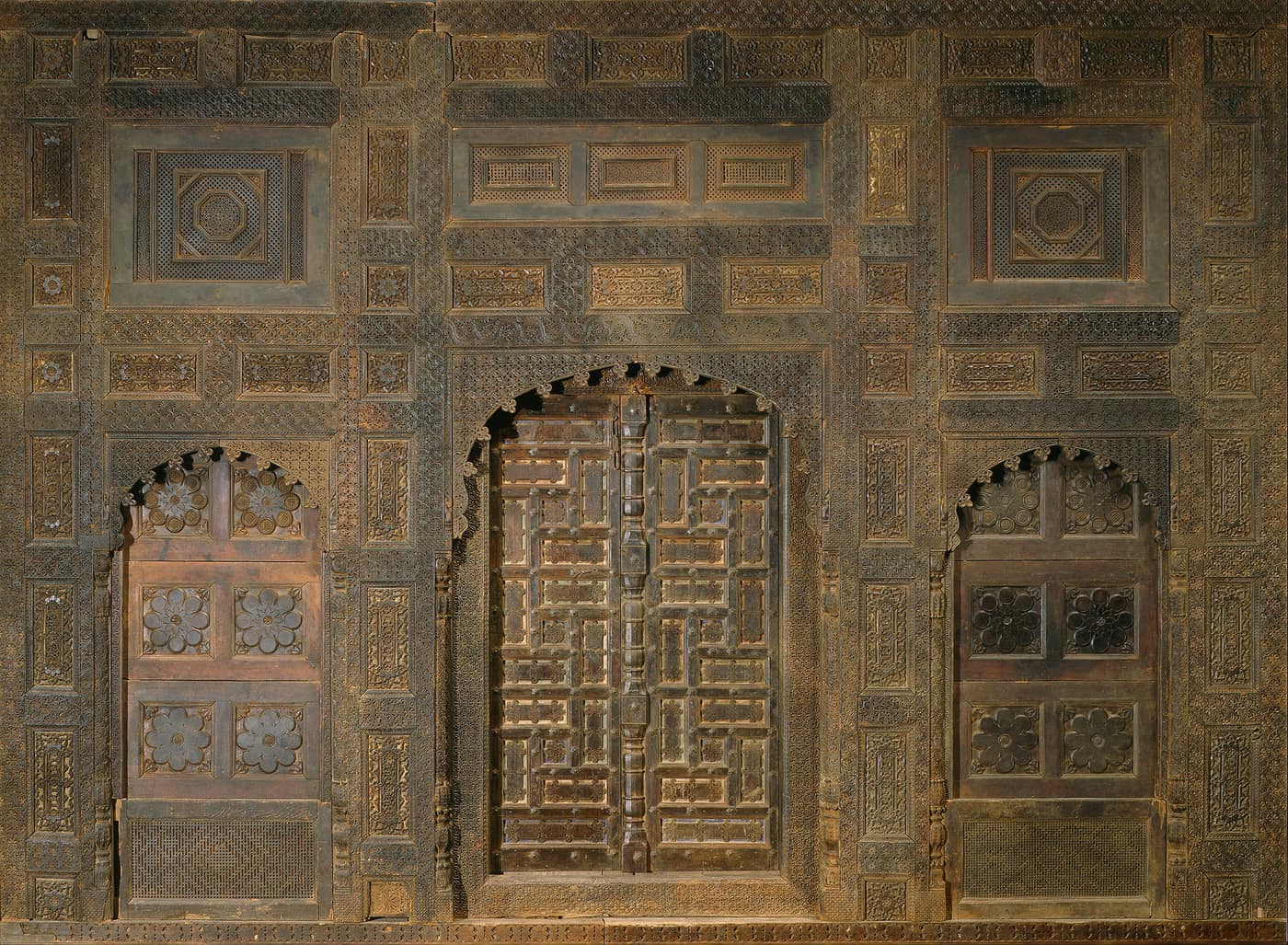
The Swat valley’s old houses and palaces were made of the mountains around them: walnut and deodar cedar, carved into lattices, rosettes, calligraphic medallions and deep geometric facades. The best-known examples, like the carved palace façades preserved in museum collections, show a complete architectural language — doors, windows, balconies and eaves all speaking the same vocabulary.
Cedar cuts clean and resists decay; walnut takes finer detail and polishes to a deep brown. Carvers still argue about which is the nobler wood, and the honest answer is that each suits different work: cedar for exterior doors and room dividers, walnut for panels, mirrors and furniture where detail matters.
The tradition is alive but busy — most workshops make to the local building trade. Commissions like ours keep the older, slower vocabulary in use: a calligraphic panel, a carved mirror frame, a headboard whose motif echoes a palace door. Each commission is drawn first, agreed in wood and motif, then carved over weeks.
If you commission carved work, think in generations. Oil-finished walnut darkens beautifully with handling; cedar weathers silver-grey if left bare. Either way, the piece will outlast the room it is made for — which is rather the point.